---
title: The Business Case For Adaptive Golf
description: Discover how adaptive golf can boost revenue and engagement for golf facilities while promoting inclusion and community growth. Embrace this emerging opportunity.
image: https://vertacat.com/hubfs/images/Website%20Images/GC_1-16-1-1.jpeg
---
[Skip to the main content.](https://vertacat.com/blog/the-business-case-for-adaptive-golf#main-content)
[](https://vertacat.com)
[](https://vertacat.com)
- [On the Course](https://vertacat.com/on-the-course)
- [In the Sim](https://vertacat.com/in-the-sim)
- Get Started
- [VertaCat Near You](https://vertacat.com/try-vertacat)
- [Financing Resources](https://vertacat.com/financing)
- [Performance Features](https://vertacat.com/features)
- Media
- [Blog](https://vertacat.com/blog)
- [Newsroom](https://vertacat.com/newsroom/)
- [FAQ](https://vertacat.com/vertacat-faq)
- [Contact](https://vertacat.com/contact)
Toggle Menu
Toggle Menu
- [On the Course](https://vertacat.com/on-the-course)
- [In the Sim](https://vertacat.com/in-the-sim)
- Get Started
- [VertaCat Near You](https://vertacat.com/try-vertacat)
- [Financing Resources](https://vertacat.com/financing)
- [Performance Features](https://vertacat.com/features)
- Media
- [Blog](https://vertacat.com/blog)
- [Newsroom](https://vertacat.com/newsroom/)
- [FAQ](https://vertacat.com/vertacat-faq)
- [Contact](https://vertacat.com/contact)
[Facebook](https://www.facebook.com/profile.php?id=100094331393993) [Instagram](https://www.instagram.com/vertacat_standandplay/)
3 min read
# The Business Case For Adaptive Golf
[VertaCat](https://vertacat.com/blog/author/vertacat) April 16, 2026
[Adaptive Golf](https://vertacat.com/blog/tag/adaptive-golf) [News](https://vertacat.com/blog/tag/news) [Course owners](https://vertacat.com/blog/tag/course-owners) [Community](https://vertacat.com/blog/tag/community)
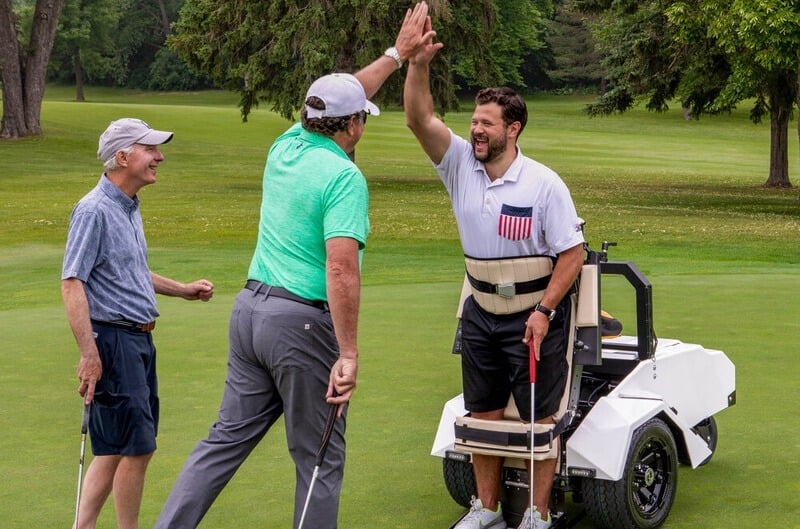
Article originally presented by Jeff Nicholson (VertaCat) and Dave Barton, PGA (Alliance) for [Issue #39 of Golf Inclusion Monthly®](https://issuu.com/golfinclusionmonthly/docs/golf_inclusion_monthly_-_april_2026?fr=sMjQ2Zjg0MzA0NTM), published by [The National Alliance For Accessible Golf](https://www.accessgolf.org/)
---
## A Practical Growth Strategy for Owners, Operators, and Golf Professionals
For golf course owners, operators, and professionals, the challenge is familiar: how do you grow rounds, increase revenue per visit, and remain relevant to a changing demographic landscape?
One of the most promising—and underutilized—answers lies in adaptive golf.
While often viewed through the lens of inclusion or community impact, adaptive golf is increasingly proving to be a viable and scalable business strategy. Based on analysis conducted for a real U.S. golf facility in a strong coastal market, the numbers tell a compelling story—one that applies to courses across the country.
## A Market You’re Already Serving—But Not Fully Reaching
Within a typical 30-minute drive-time radius of a mid-to-large U.S. golf facility, the total population can range from 600,000 to 800,000 people. Using established public health data, approximately 13% of that population lives with some form of mobility impairment. That translates to roughly 78,000 to 104,000 individuals in a single primary market area.
Now consider this: industry benchmarks indicate that 10–12% of that group either already plays golf, has played previously, or would engage if access barriers—primarily equipment and confidence—were addressed. That’s a potential adaptive golf audience of 7,800 to 12,500 individuals.
Most facilities today are capturing only a fraction of that.
## The Revenue Multiplier Effect
Adaptive golf is not just about the individual player—it’s about the group dynamic.
Unlike many other customer segments, adaptive golfers rarely play alone. They participate with spouses, friends, caregivers, or playing partners. In other words, every adaptive golfer represents multiple rounds, not just one.
Consider two realistic participation scenarios:
**Ultra-Conservative Scenario** A facility engages just 50 adaptive golfers, each playing four rounds annually, typically accompanied by one other player.
That level of activity—representing well under 1% market capture—can generate approximately $46,000 in incremental annual revenue through green fees, cart rentals, and food and beverage.
**Integrated Foursome Scenario** Now scale modestly: 120 adaptive golfers playing six rounds annually, each within a traditional foursome. Because those rounds include accompanying players, total participation expands significantly. The resulting impact can approach $300,000+ in incremental annual revenue.
For most facilities, that is not marginal—it is meaningful.
## Why Adoption Often Starts Slow—and Why That’s Normal
Operators sometimes hesitate because early utilization of adaptive equipment can appear limited. This is not a demand issue—it’s an awareness and confidence curve. [Facilities that succeed in this space](https://vertacat.com/blog/how-rose-creek-golf-course-became-a-destination-for-adaptive-golfers) typically move through three phases:
- **Phase 1: Passive Availability** – Equipment is present, but awareness is low. Utilization is minimal.
- **Phase 2: Structured Introduction** – Golf professionals introduce adaptive golf through lessons, [clinics, and local partnerships](https://vertacat.com/blog/the-loop-in-chaska-building-adaptive-golf-access-from-day-one). This is where momentum begins.
- **Phase 3: Integration** – Adaptive golfers transition into regular play, joining standard groups and contributing consistently to rounds and revenue.
This progression often unfolds within 6 to 12 months when supported by even modest programming and promotion.
## The Golf Professional’s Role
For golf professionals, adaptive golf is a natural extension of player development.
It creates opportunities to:
- Re-engage former golfers who left the game due to injury or physical limitation
- Introduce new players who previously viewed golf as inaccessible
- Expand lesson programming through clinics and one-on-one instruction
- Strengthen relationships with families and multi-generational players
Importantly, it also reinforces the professional’s role as a leader in growing the game.
## Beyond the Numbers
While the financial upside is clear, adaptive golf also aligns with broader industry priorities.
- It supports inclusion
- It strengthens community engagement
- It enhances a facility’s reputation
And increasingly, it meets the expectations of today’s consumer, who values access and meaningful experiences.
## A Scalable, Transferable Opportunity
What makes this opportunity particularly attractive is its portability.
The analysis behind these projections is based on an actual U.S. golf facility—but the underlying dynamics are not unique to that market. Any course with a meaningful population base, existing infrastructure, and a commitment to player development can replicate similar results.
The barrier to entry is relatively low. The upside, both financially and culturally, is significant.
## The Bottom Line
Adaptive golf is no longer a niche initiative. It is a practical, revenue-generating strategy that fits squarely within the operational goals of today’s golf facilities.
For golf course owners, facility leaders, golf professionals, and more, the question is no longer if this segment matters—but how quickly and effectively it can be integrated into your operation.
Those who move early will not only capture new revenue—they will help define the[future of the game](https://vertacat.com/blog/minnesota-makes-history-why-every-state-needs-access-to-adaptive-golf).
[](https://vertacat.com/hs/cta/wi/redirect?encryptedPayload=AVxigLJco%2FM%2BtQ8Agd4g2sQlTFUN2bLgWCDpJ4MztJt2ld6gMMwPl3fT%2Bd6DCWmkjJeYKef1D2Ho8aHpws3tnYmNEdT5NQ7nr8LXKb43Owl1FkvvfpSrutgSp9qqfc5dLBIs2ryitSKGBEpj5wOHB7ASXqdNLWhlZfNHp3QCjRVFICckK8gEUS7S5QZD4CqGeydfZNyhu5fEpQ%2BO&webInteractiveContentId=207051705517&portalId=40849462)
- [Tweet](https://twitter.com/share)
#### Sign Up Now!
[](https://vertacat.com/blog/five-vertacat-golfers-take-on-the-us-adaptive-open)
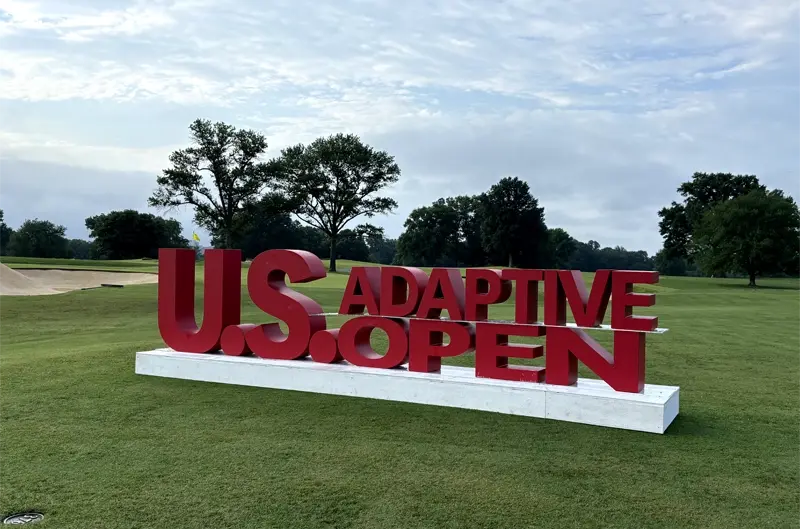
#### [Five VertaCat Golfers Take On the 2026 U.S. Adaptive Open](https://vertacat.com/blog/five-vertacat-golfers-take-on-the-us-adaptive-open)
Aug 21, 2026, 12:00:00 PM
The 2026 U.S. Adaptive Open at Woodmont Country Club brought together five VertaCat athletes: Max Togisala, Ben Hulin, Thomas Duffy, Trevor Kennison,...
[Adaptive Golf](https://vertacat.com/blog/tag/adaptive-golf) [Community](https://vertacat.com/blog/tag/community)
[Read More →](https://vertacat.com/blog/five-vertacat-golfers-take-on-the-us-adaptive-open)
[](https://vertacat.com/blog/inside-the-program-bringing-adaptive-golf-to-all-of-georgia)
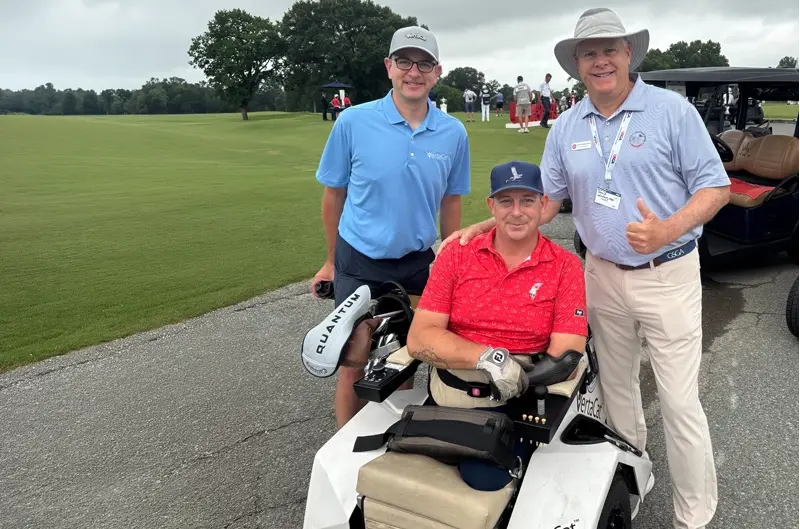
#### [Inside the Program Bringing Adaptive Golf to All of Georgia](https://vertacat.com/blog/inside-the-program-bringing-adaptive-golf-to-all-of-georgia)
Aug 14, 2026, 12:00:00 PM
David Windsor has spent nearly three decades introducing golfers to adaptive golf, first from a single course in Sarasota, Florida, and now as the...
[Adaptive Golf](https://vertacat.com/blog/tag/adaptive-golf) [Community](https://vertacat.com/blog/tag/community)
[Read More →](https://vertacat.com/blog/inside-the-program-bringing-adaptive-golf-to-all-of-georgia)
[](https://vertacat.com/blog/simcat-standing-mobility-rehabilitation-adaptive-golf-carts)
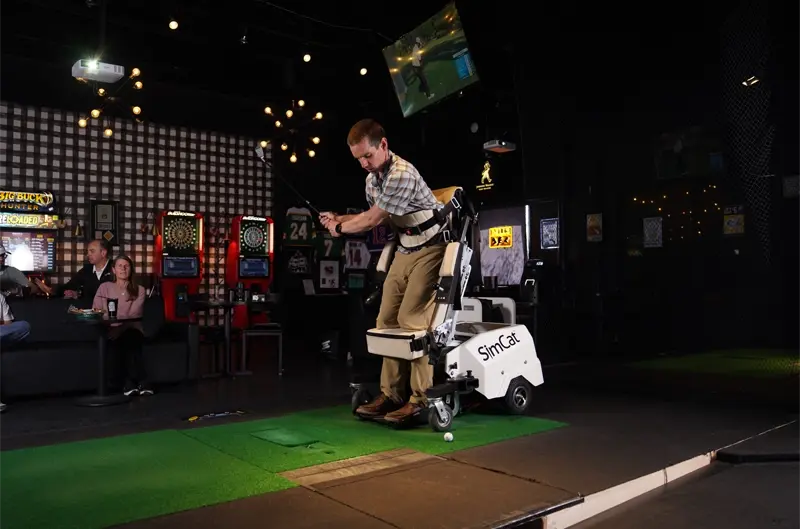
#### [Why Rehab Facilities Are Looking at Adaptive Golf Carts](https://vertacat.com/blog/simcat-standing-mobility-rehabilitation-adaptive-golf-carts)
Aug 7, 2026, 12:00:00 PM
Rehab facilities invest heavily in functional mobility equipment. Parallel bars, tilt tables, and standing frames help get people upright.
[SimCat](https://vertacat.com/blog/tag/simcat)
[Read More →](https://vertacat.com/blog/simcat-standing-mobility-rehabilitation-adaptive-golf-carts)
[](https://vertacat.com)
- [Privacy Policy](https://vertacat.com/policies/terms-and-conditions/)
- [Terms & Conditions](https://vertacat.com/policies/terms-and-conditions/)
- [Spec Sheet](https://vertacat.com/hubfs/VertaCat_November2024/pdf/Spec-Sheet-VertaCat-052024.pdf)
- [Testimonials](https://vertacat.com/testimonials)
- [Contact Us](https://vertacat.com/contact)
© 2026 Copyright VertaCat
[Facebook](https://www.facebook.com/profile.php?id=100094331393993)[Instagram](https://www.instagram.com/vertacat_standandplay/)
651-968-4912 | [support@vertacat.com](mailto:support@vertacat.com)
At **VertaCat**, we envision a world where mobility limitations do not hamper your freedom to engage in your favorite outdoor activities. Our *Stand-On-Command All-Terrain Mobility Rider* provides a revolutionized approach to personal mobility, allowing you to **stand upright** and explore *off-road terrains* with effortless ease.
With VertaCat, you can immerse in the thrill of golf, archery, hunting, fishing, or simply the joy of nature, without worrying about your mobility needs. Powered by our **“Friction-Free”** stand-up assist and packed with exclusive **“Cat Smart”** safety features, VertaCat is your ideal companion for any outdoor adventure.
**Stand tall**, *roam free*, and **“Stand and play the VertaCat way”**.
Return to top
```json
{
"@context" : "https://schema.org",
"@type" : "BlogPosting",
"author" : {
"@type" : "Person",
"name" : "VertaCat",
"url" : "https://vertacat.com/blog/author/vertacat"
},
"dateModified" : "2026-04-16T17:06:02.339Z",
"datePublished" : "2026-04-16T17:06:02.000Z",
"headline" : "The Business Case For Adaptive Golf",
"image" : [ "https://vertacat.com/hubfs/images/Website%20Images/GC_1-16-1-1.jpeg" ],
"mainEntityOfPage" : {
"@id" : "https://vertacat.com/blog/the-business-case-for-adaptive-golf",
"@type" : "WebPage"
},
"publisher" : {
"@type" : "Organization",
"logo" : {
"@type" : "ImageObject",
"url" : "https://vertacat.com/hubfs/VertaCat_November2024/images/vertacat-logo.svg"
}
}
}
```