Five VertaCat Golfers Take On the 2026 U.S. Adaptive Open
The 2026 U.S. Adaptive Open at Woodmont Country Club brought together five VertaCat athletes: Max Togisala, Ben Hulin, Thomas Duffy, Trevor Kennison,...
3 min read
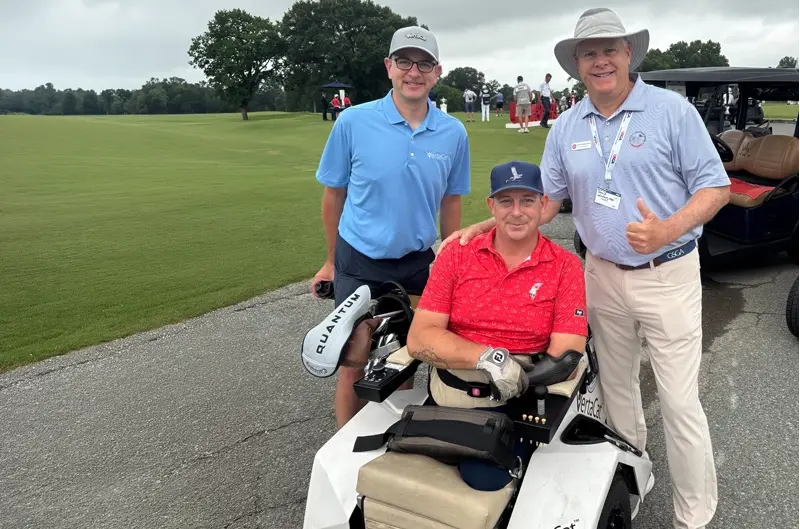
David Windsor has spent nearly three decades introducing golfers to adaptive golf, first from a single course in Sarasota, Florida, and now as the Adaptive Golf Director for the Georgia State Golf Association.
Under his guidance, a network of coaches and volunteers has grown the program to 13 locations across Georgia, running more than 40 clinics every month.
For David, the work is about giving someone who thought their golfing days were over a way back to the course.
For many golfers, an injury or a diagnosis changes how the body moves. It can also change how a person sees their future in the sport, and sometimes in life itself.
"There are so many people in spinal cord injury units who haven't been aware that this opportunity exists," David says. "A lot of them are in a dark place, and they don't know how far out to think."
Before adaptive equipment caught up to that need, coaches had to improvise. A player who needed to stay in a power chair couldn't take that chair onto a course, so options were limited to shorter clubs and workarounds.
"If we don't have the right equipment for them to use, something like a VertaCat, then it changes the game a little bit. It's going to limit them, and they're not going to take their power chair out for a round of golf, even on a short course," David explains.
David's path into adaptive golf started with a physical therapist he met who was already bringing clients with brain injuries, strokes, and limb loss to a nearby course, and that course was closing for renovations.
David offered his own course as a replacement, and the weekly sessions that followed became the foundation for everything that came next.
"We did everything we could to build and adapt the equipment and technology we had, and we learned the techniques as we went," David says. "We started to document all of it so we could establish an education program and teach other PGA members, PTs, OTs, and others in the health industry how to serve people in recovery."
Georgia launched its program in 2015 with one clinic a month.
"And it started to replicate. We attracted volunteers and got the support we needed, and now we're up to 13 locations across the state, from metro Atlanta down to Columbus, middle Georgia, and South Georgia's Valdosta. We do over 40 golf clinics a month, all complimentary, for youth, adults, and veterans."
Each clinic draws on a mix of lead coaches and trained volunteers. Lead coaches are often PGA or LPGA professionals.
Volunteers come through Georgia's own coach development program, the Adaptive Golf Academy.
"We cover all the impairment categories you see in adaptive ranking events, and we talk about where people came from and what their characteristics are," David explains.
Training includes hands-on exercises so coaches know the experience firsthand.
"We have people sit and try to swing left-handed, right-handed, with both hands. We use blindfolds or glasses that limit vision, and prosthetic legs so an able-bodied person gets a feel for the balance and gait involved," David says.
Equipment like the VertaCat plays a major role for seated players and power chair users.
"Having a vehicle like the VertaCat brings it full circle. It gives them the freedom, the independence. Some of them are so independent, they've figured out their own way to tee up the ball without a caddy."
David added that Georgia still encourages the buddy system for seated players, treating golf as something best shared rather than played alone.
The results of Georgia's program aren't measured only in clinic counts. They show up every time someone gets to do something they thought they couldn’t. David describes it:
"The most gratifying thing is when a participant comes out and doesn't believe they could ever play again. They don't believe they could ever get a club in their hand and get upright. To prove someone wrong in that way, and have them say thank you, when really they're the ones who did it, that never gets old."
Coaches he trained now text or call him after a breakthrough session of their own, and the program leans on partnerships, including the United States Adaptive Golf Alliance and its 64 member groups.
For golf associations and course operators considering a similar program, David says, "There's a population out there in every state, no matter how small the town feels. This isn't just good business. It's the right thing to do, and it's going to change lives no matter where you are."

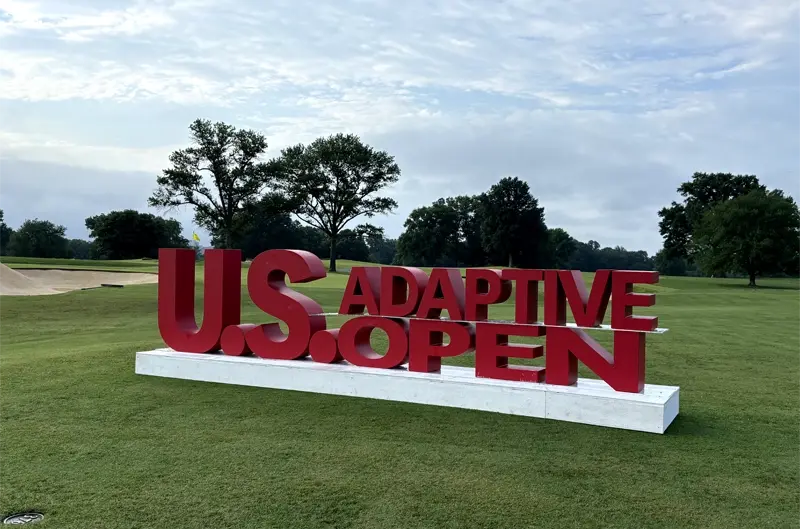
The 2026 U.S. Adaptive Open at Woodmont Country Club brought together five VertaCat athletes: Max Togisala, Ben Hulin, Thomas Duffy, Trevor Kennison,...
David Windsor has spent nearly three decades introducing golfers to adaptive golf, first from a single course in Sarasota, Florida, and now as the...
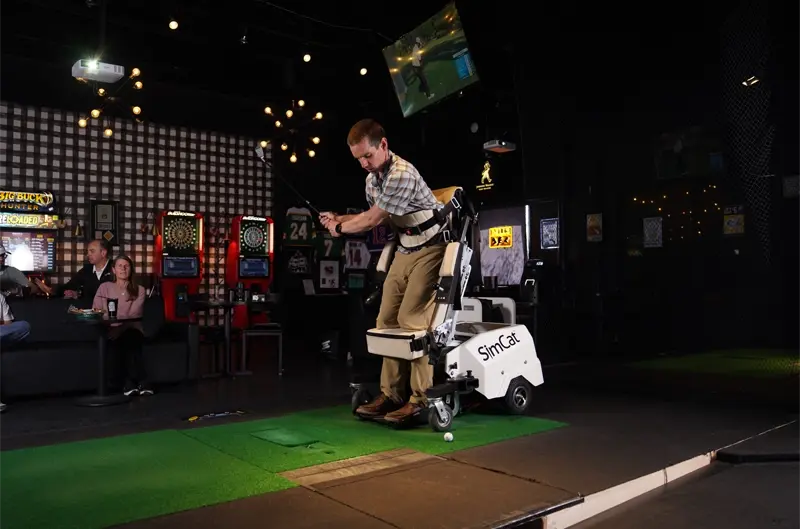
Rehab facilities invest heavily in functional mobility equipment. Parallel bars, tilt tables, and standing frames help get people upright.